
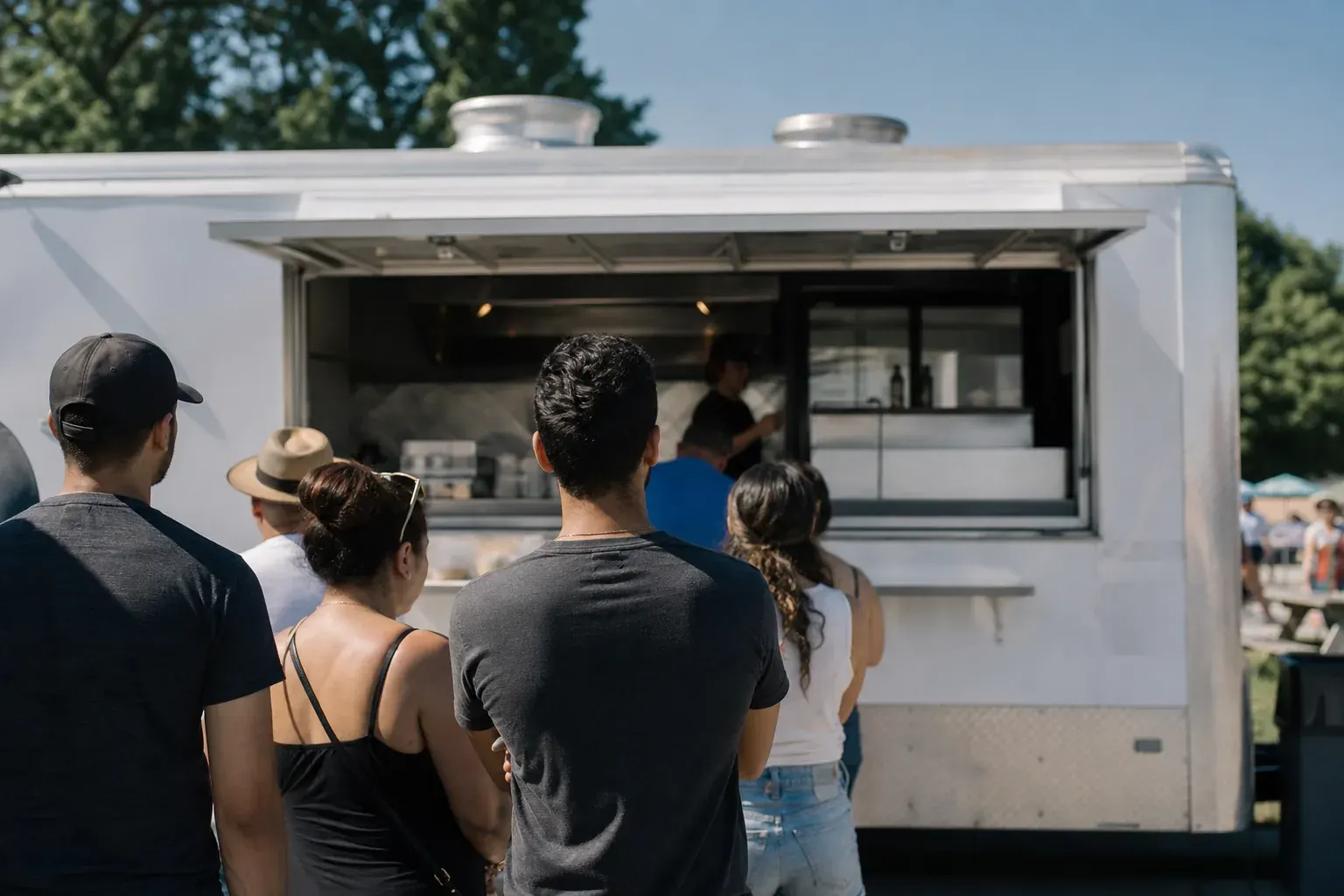
Food Truck Insurance in Ontario
A food truck is a restaurant, a vehicle and an event vendor at the same time. That means you need coverage for all three. We connect Ontario food truck owners with licensed brokers who understand mobile food businesses and the permits you need to operate.
Connect Now
Service & Support:
- Follow-up from a licensed broker within 24 hours
- Policy Review and Comparison
- Risk Assessment
- Help with certificates of insurance, policy changes and contract reviews
- Renewal planning well before your policy expires
Quick answer
What insurance does a food truck need in Ontario?
An Ontario food truck usually needs commercial auto insurance for the vehicle, commercial general liability (the City of Toronto requires $2,000,000 for a food truck licence), coverage for cooking equipment and stock on the truck, and event coverage for festivals. Propane and generators should be disclosed. WSIB applies if you have workers.
One business, three kinds of risk
Food trucks face the same kitchen risks as a restaurant, such as fires, burns and food illness claims, plus the road risks of a commercial vehicle and the contract requirements of festivals, markets and private events.
Cities also set insurance rules. In Toronto, a motorized refreshment vehicle licence requires proof of $2,000,000 in commercial general liability, sent by your insurance representative, along with a propane inspection if you use propane or natural gas, a health inspection letter and a vehicle safety certificate. Other municipalities have their own requirements.
Connect NowHow CommercialInsurance.ca works
We are not an insurer or a broker. We find you the right one.
Matched by industry
We connect you with a broker who works with businesses like yours, not a generic call centre.
Licensed Ontario brokers
Insurance brokers in Ontario are licensed by the Registered Insurance Brokers of Ontario (RIBO).
Fast follow up
Once we receive your information, a professional in our network will connect with you within 24 hours.
No cost to be matched
Our referral service is free for businesses. You deal directly with the broker for quotes and coverage.
What coverage does a food truck need?
Most food truck programs combine these coverages.
Commercial auto insurance
Your truck needs commercial auto coverage, not a personal policy. It covers liability for collisions, damage to the truck and injuries on the road, and it should reflect the equipment built into the vehicle.
- Liability for collisions and injuries
- Collision and comprehensive for the truck
- Read our commercial auto guide
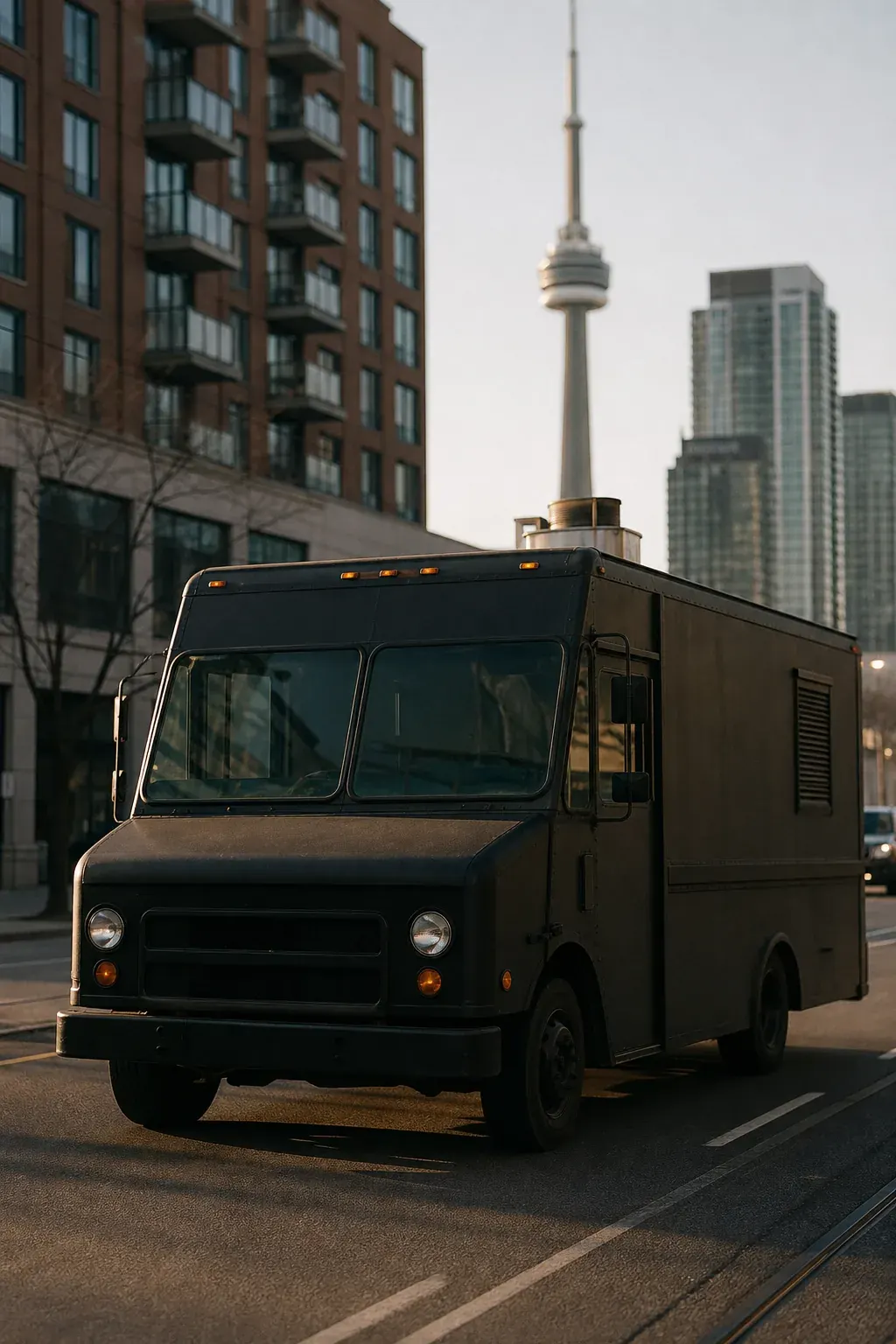
Commercial general liability
Covers customers hurt at your service window, food related illness claims and damage to event sites. Cities, festivals and markets will ask for a certificate of insurance and often want to be named as an additional insured.
- $2 million is standard for Toronto licensing
- Additional insured certificates for events
- Products coverage for food you serve
Equipment, propane and stock
The grills, fryers, refrigeration and generator on your truck are expensive and may not be fully covered by auto insurance. Equipment coverage protects them, and spoilage covers stock lost when refrigeration fails.
- Cooking equipment and generators
- Food stock and spoilage
- Equipment breakdown
Food truck risks to plan for
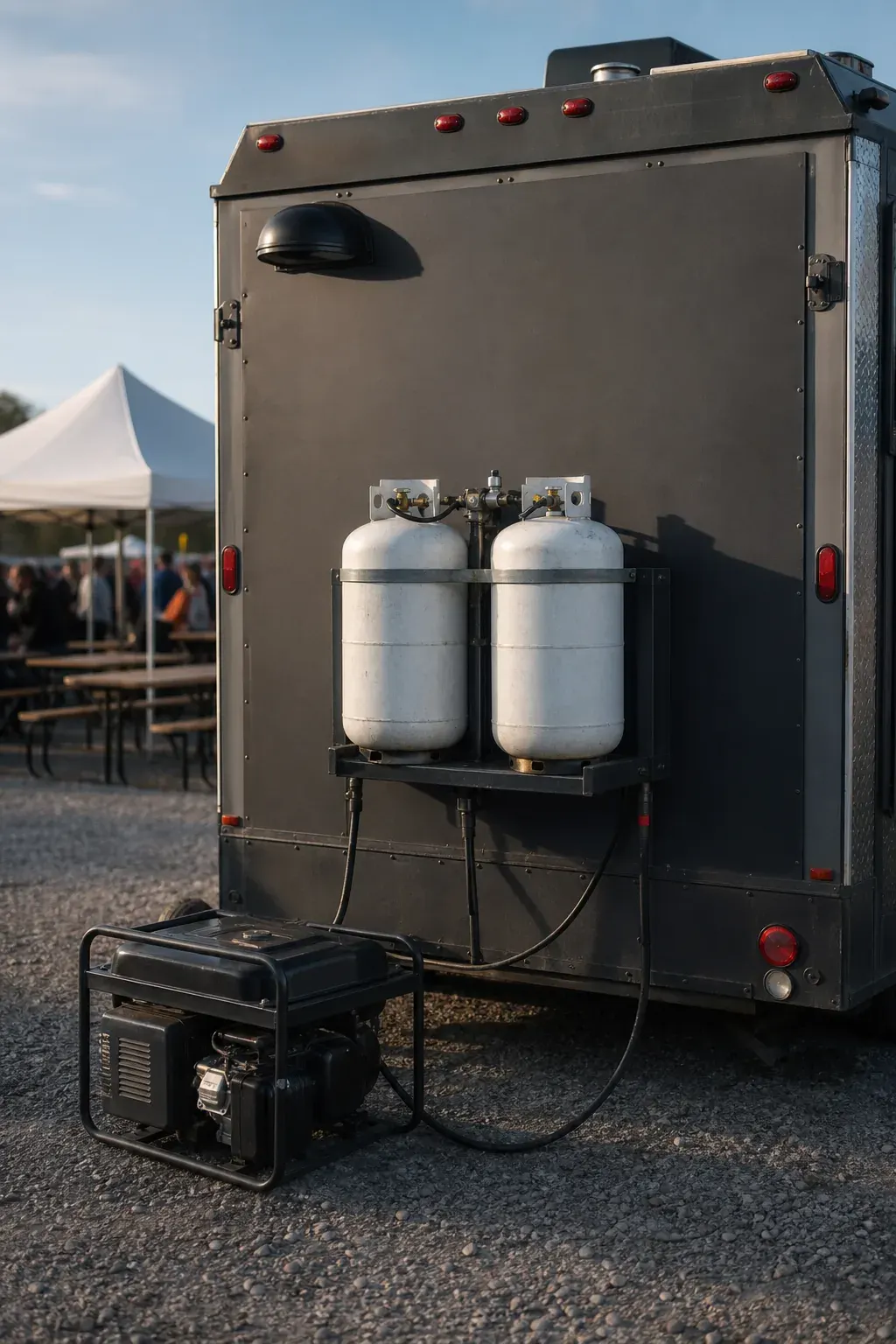
Propane, generators and fire
Propane and generator fires are a leading cause of serious food truck losses. Keep inspections current, secure tanks properly and carry a fire extinguisher suited to kitchen fires.
- Propane inspection by a certified technician
- Secure tank mounting and leak checks
- Class K and ABC extinguishers on board
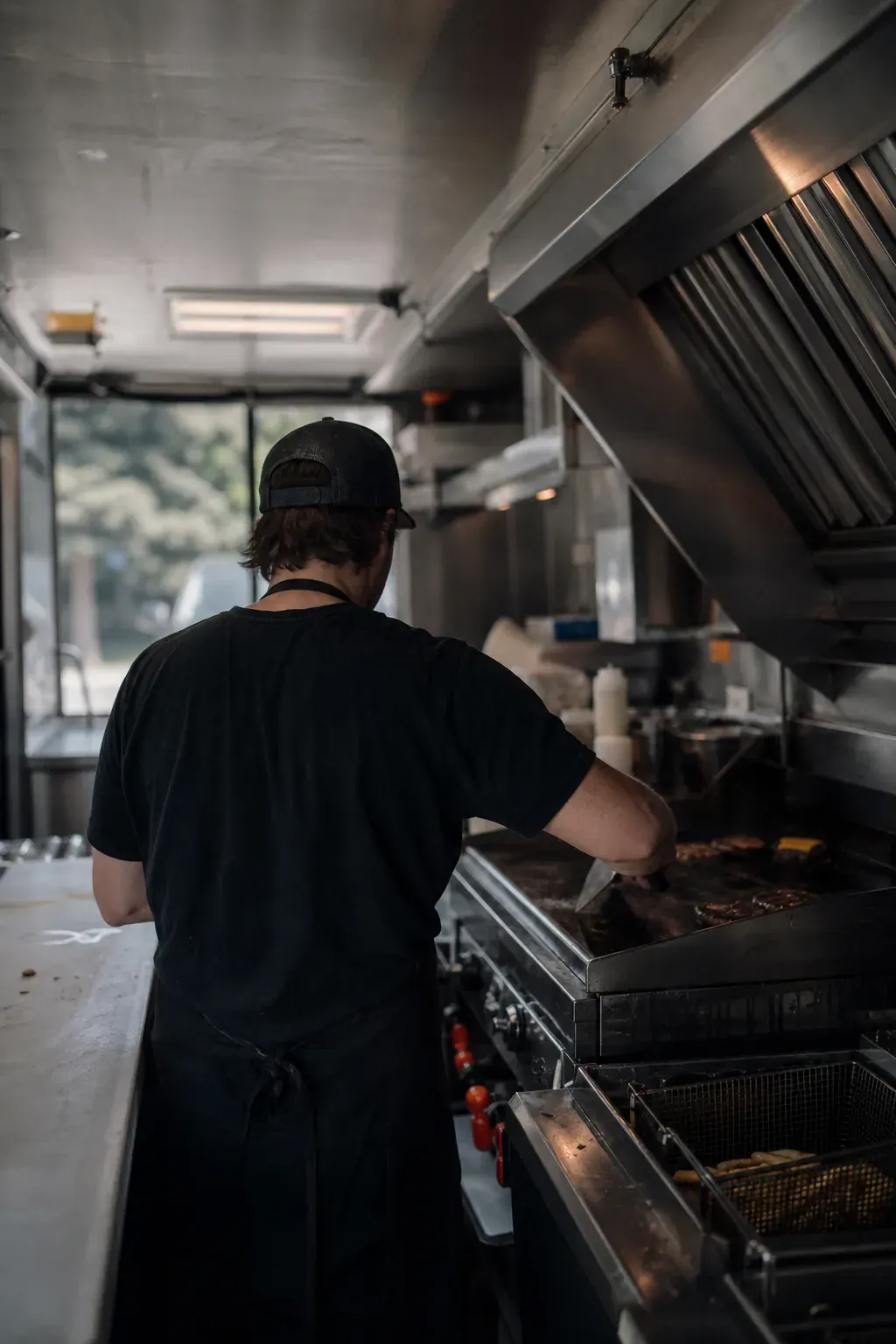
Festivals, markets and private events
Event organizers set their own insurance requirements and often ask for $2 million or $5 million in liability with them named as additional insured. A broker can issue certificates quickly so you never miss a booking.
- Keep a list of event insurance requirements
- Request certificates early
- Check if events allow alcohol near your truck
What does food truck insurance cost?
As a general guide, many Ontario food trucks see roughly $1,800 to $4,500 a year for liability, equipment and stock coverage, with commercial auto priced separately based on the vehicle, drivers and where it operates. These are estimates only. See our cost guide.
Pushes the price up
- Deep frying and propane
- High value custom builds
- Many events and long distances
- Young or inexperienced drivers
Helps keep it down
- Current propane and fire inspections
- Secure overnight parking
- Clean driving records
- Claim free history
Also consider
- WSIB for staff
- Business interruption if the truck is off the road
- Cyber for mobile payments
Get your truck covered before the season starts
Permits and event bookings move fast. Tell us about your food truck and we will connect you with a licensed Ontario broker who can put the right auto and liability program in place and issue certificates when you need them.
Also catering private events? See our catering insurance guide.
Connect NowFood Truck Insurance FAQs
How much liability insurance does a Toronto food truck need?
The City of Toronto requires proof of $2,000,000 in commercial general liability for a food truck licence, with the certificate signed and sent by your insurance representative. Check the current requirements with the City and any event you attend.
Does my auto insurance cover the kitchen equipment in my truck?
Not always fully. Commercial auto may cover permanently attached equipment up to a limit, but grills, generators and stock are often better protected with separate equipment and property coverage.
Can I use a personal auto policy for a food truck?
No. A food truck is a commercial vehicle and needs commercial auto insurance. Using a personal policy for business use can leave you without coverage after a claim.
Do I need special insurance for festivals?
Many festivals require you to name them as an additional insured and may require higher limits. Your broker can issue event certificates under your existing policy.
What does food truck insurance cost in Ontario?
Many food trucks see roughly $1,800 to $4,500 a year for liability, equipment and stock coverage, plus commercial auto priced separately. Actual costs depend on your truck, cooking, drivers and events.
Is WSIB required for a food truck business?
If you have workers, most Ontario food businesses must register with WSIB. It is separate from your liability and auto insurance.
What happens after you request commercial insurance?
 1
1Discovery Call
(30 to 45 min)Understand operations, contracts, assets, and loss history.
Get Started Now!
We will request your
expiring policies and loss runs. 2
2Risk Mapping
(1 to 3 days)Document exposures, limits, sublimits, deductibles, and endorsements that fit your contracts.
Get Started Now! 3
3Market Placement
(2 to 5 days)Approach the right markets
Get Started Now!
and negotiate terms, exclusions, and deductibles. 4
4Proposal & Bind
Get Started Now!
Side-by-side options in clear wording, so you can choose with confidence.
Protect your team too
Offer health, dental and life benefits your employees will value.
We also connect Ontario businesses with licensed benefits advisors, from two person teams to growing companies.
 5/5 rating on Google
The Commercial Insurance Difference: Feedback from those referred
Proactive Broker Relationship.
The most noticeable difference was the fact that I no longer felt that I was needed to manage the broker... the brokers came to me with proactive recommendations and knew when to push and shop the market and when not to. When the topic of business insurance comes up, I always refer fellow business owners.
Steve T
Security Blanket For My Business
I was always the type of customer that never believed in insurance and only really got it because I had to. Then I connected with a broker through Commercial Insurance.ca and they asked me questions no one else ever did and that's how I knew something was different. They took the time to understand and evaluate the risks. Well, I ended up getting some extra coverage (legal expense) and thank goodness I did. Something fairly innocent turned into something quite nasty and I didn't have to do too much... my coverage took care of it. Now I look at Insurance as a security blanket for my business.
Michael L
They had my back
No one likes buying insurance because it's a bit of a bet against yourself. You just hope that when the bad things happen that insurance will do what it said it would do in the first place. Their specialist stand behind the policy's that they bind. They never professed to get me the best price, but they did say they have my back, and have my back, they did.
Steph P